


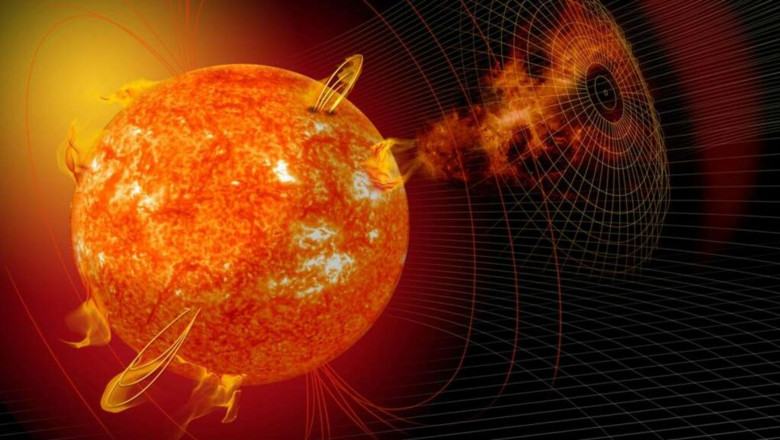

Sunlight white-light flares are turning out to be more frequent than originally thought. The sun is becoming more active as it moves closer to its solar maximum phase. Between May 5 and May 6, 2024, the sun produced three X-class solar flares with relative diameters of X1.3, X1.2, and X4.5 in little more than a day.
Strong energy bursts from the sun known as solar flares pose serious risks to radio communications systems, satellites, and astronauts. However, they also give us the captivating aurora display.
Since its launch in October 2022, China's Advanced Space-based Solar Observatory (ASO-S), also referred to as Kuafu-1 in Chinese, has been closely observing these events. The Chinese Academy of Sciences' Purple Mountain Observatory reports using ASO-S to detect more than 100 solar white-light flares.
Solar white-light flares are especially notable for their tremendous intensity since they appear as increased radiation in the visible light continuum spectrum. These flares have the ability to affect space weather, which could interfere with spacecraft operations and impair base communications.













Comments
0 comment